Flaregun Inc.
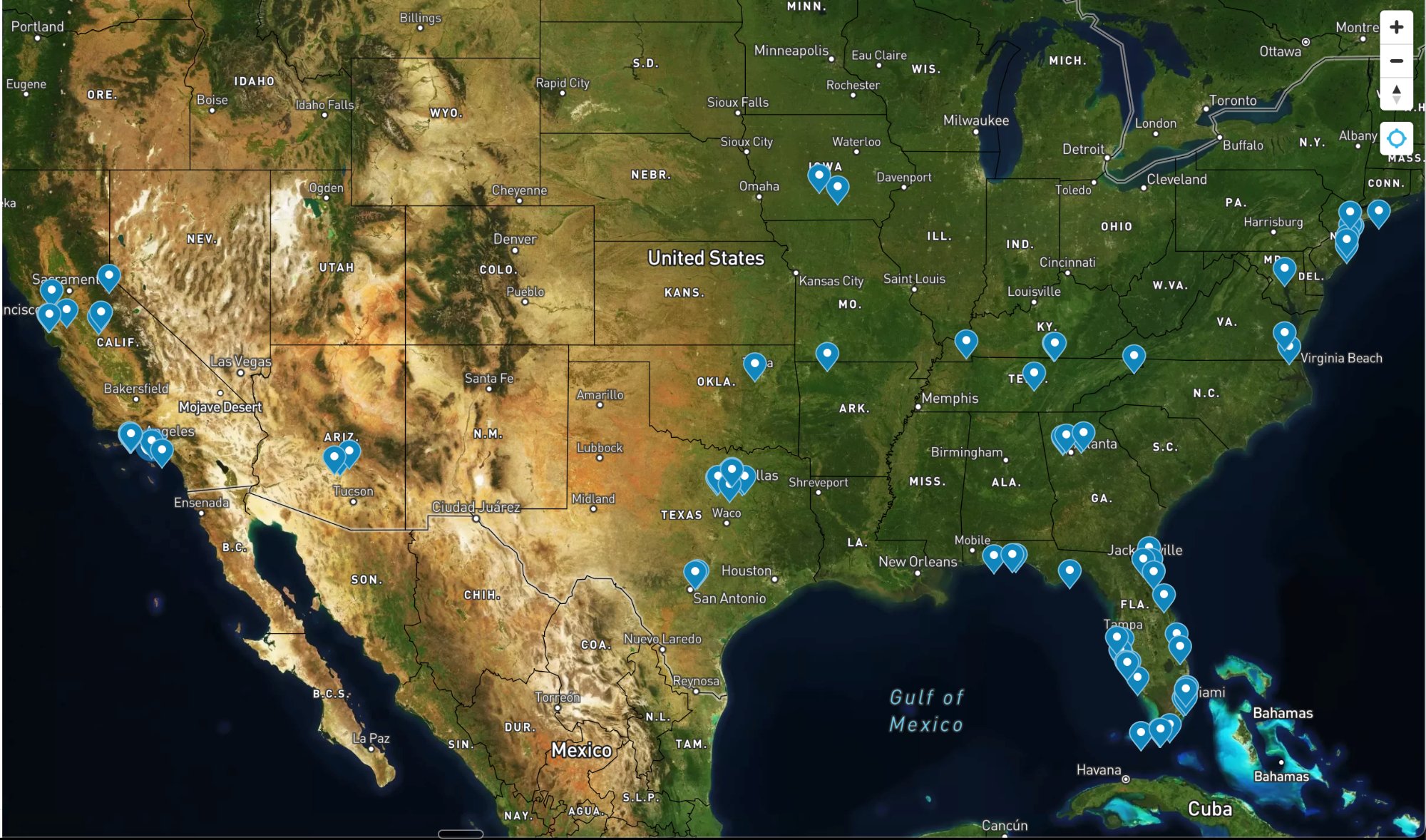
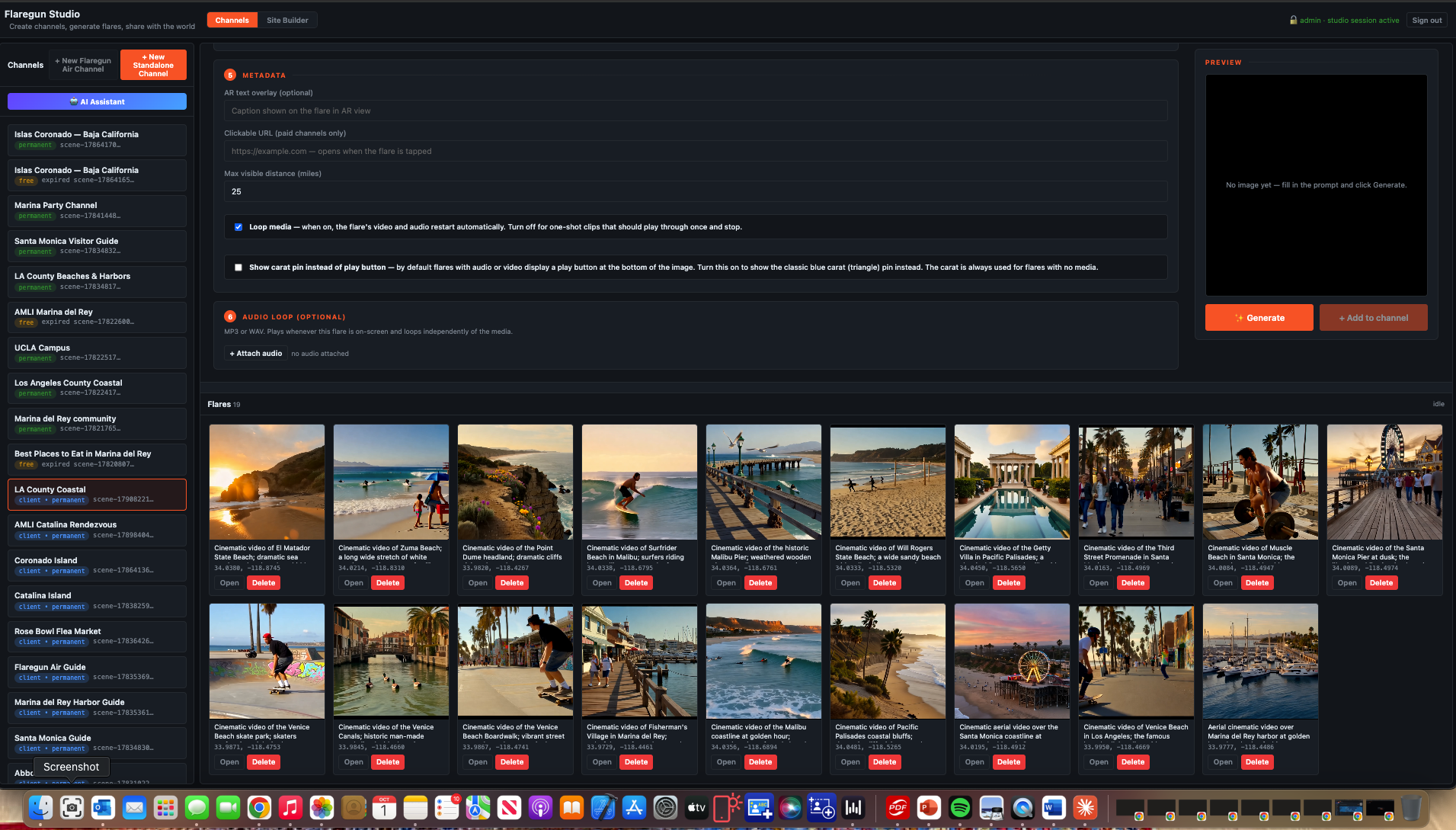
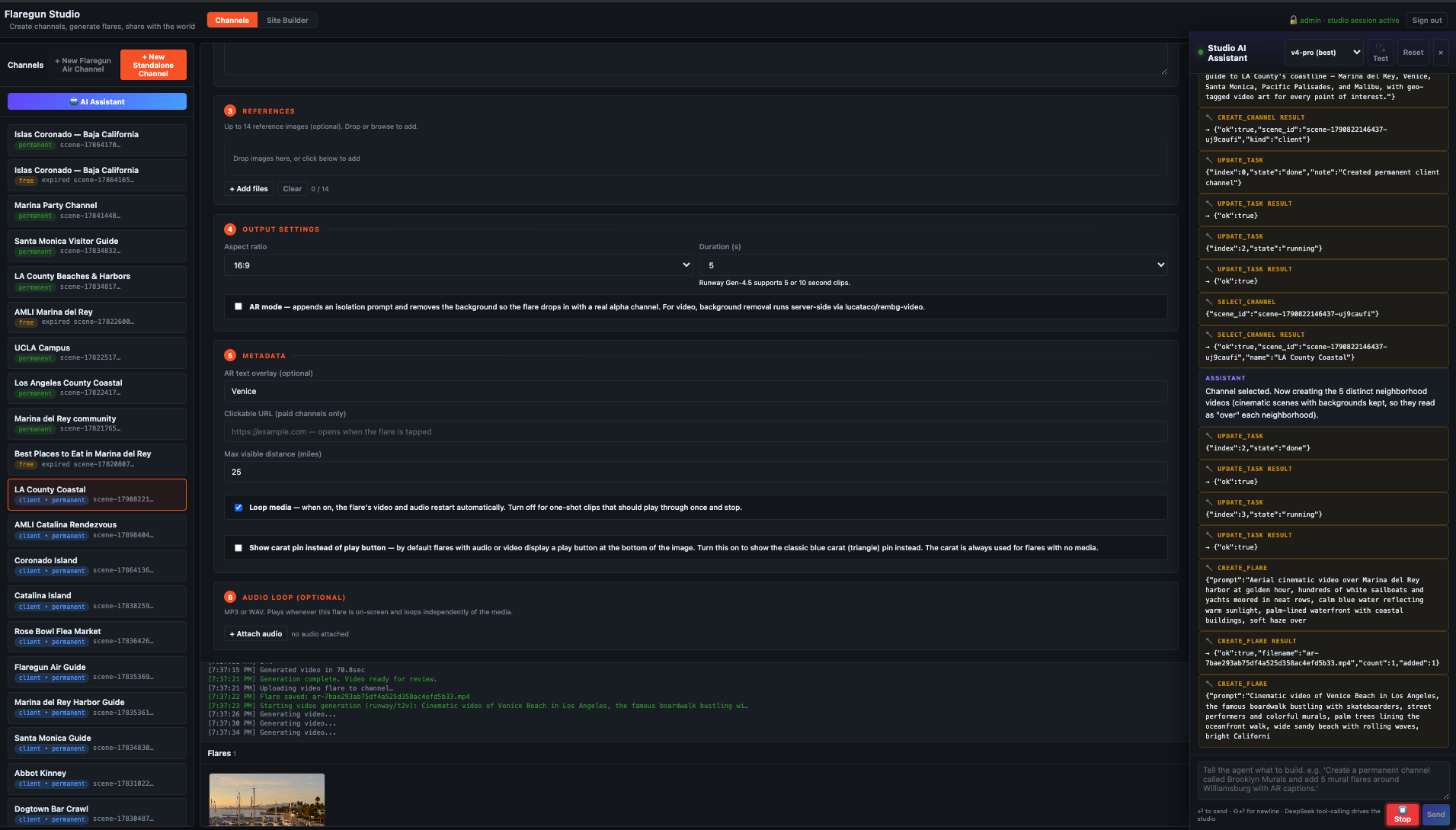
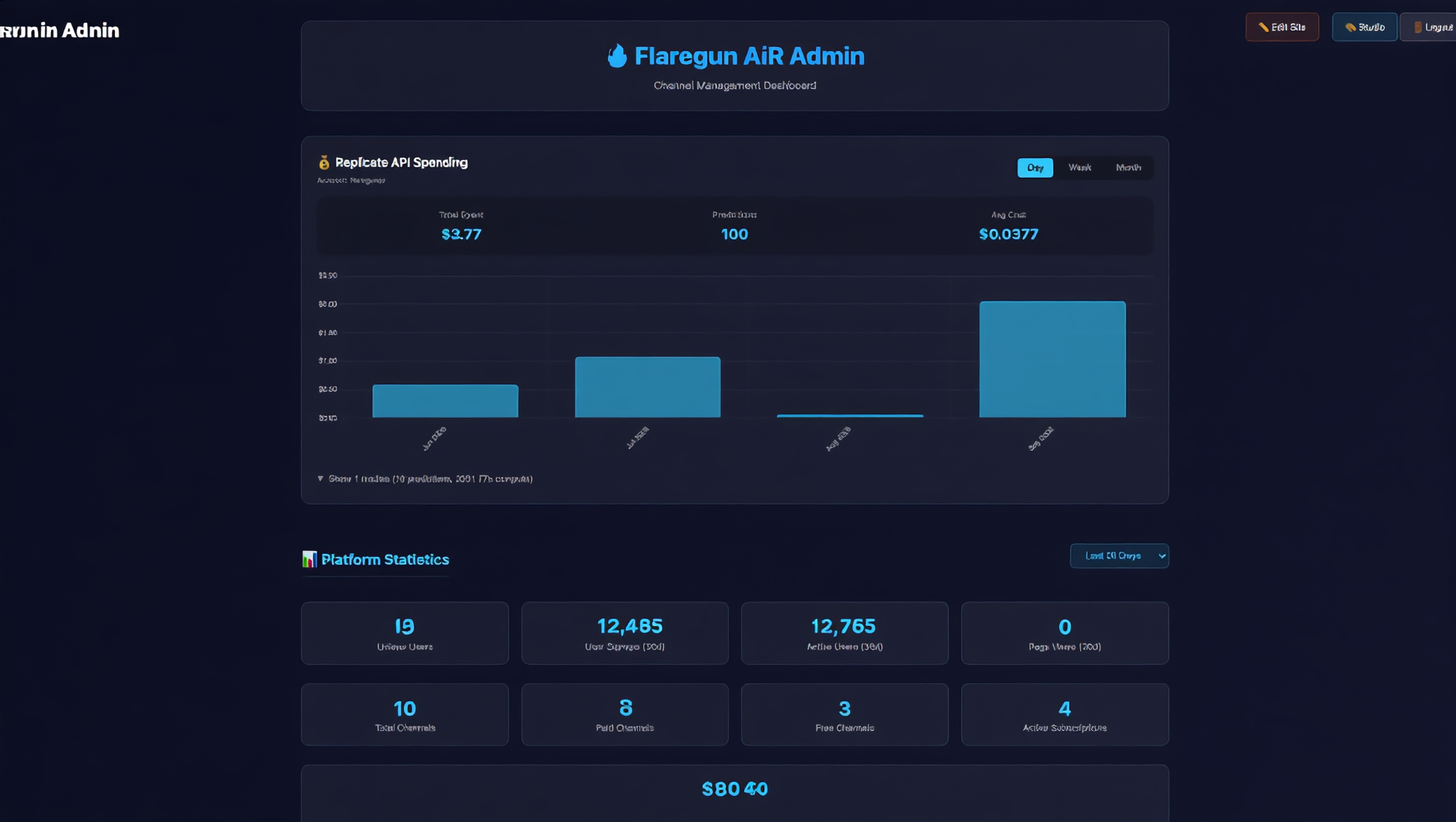
Aflaregun does one thing: it tells people where you are when words aren't enough. We patented "Visually connecting people" through AR and have been helping friends and family find each other in crowds long before most people understood the potential AR Airspace holds. We've spent thirteen years building the media version, through three near-misses, a good deal of stubbornness and belief in our vision. We are proud to present the next generation of our work, Flaregun Studio.
My father’s office was full of nautical instruments. Compasses, charts, a sextant he never used but loved to hold. He sailed whenever he could, trained for it seriously, and talked about it the way some men talk about the lives they were supposed to live. Sailing was the thing we shared, not just the act of it, but the idea of it. Orientation. Knowing where you are. Knowing how to signal when you don’t. That’s how the company got its name, though the product came from somewhere else entirely.
In 2000, 20th Century Fox relocated me to Los Angeles from my hometown of Atlanta as a writer-producer at Fox’s startup FX Networks. By 2011, I was an Executive Creative Director at 20th Century Fox Film, servicing content for domestic marketing campaigns. We supported national theatrical campaigns, created assets across every department from Publicity to Co-Brand Partnerships. We produced pre-vis presentations for franchise stakeholders, behind the scenes and influencer campaigns with big budgets. Often we were reminded, if not berated, that “we worked for a major effing studio, we had better be thinking like it.” We were constantly brainstorming how to put content in front of eyeballs. For years I worked with cameras, post-production, visual effects, 3D graphics, motion capture—the highest technology Hollywood had to offer at the time. Every day I drove on the lot was a genuine honor. But after more than a decade or so, entertainment was turning into something I loved a bit less, and audiences were turning to smaller screens. I’d become quietly obsessed with something else: location services on mobile. The idea that your phone knew where you were, and could do something meaningful with that camera, felt like the edge of a much larger wave than anything we were doing on studio lots.
The name came first, before the product. Late one night in the hills above Los Angeles, I’d left a gathering early and walked out to call a cab. Pre-Uber. Pre-everything. I was up in one of the canyons, no street signs, no house numbers I could read, slightly worse for wear, and I had no way to tell anyone where I was. Standing there in the dark, I thought: I’ve got my location. You’ve got my credit card on file. Just come find me. I went home, bought the Flaregun URLs that night, and the brainstorming began.
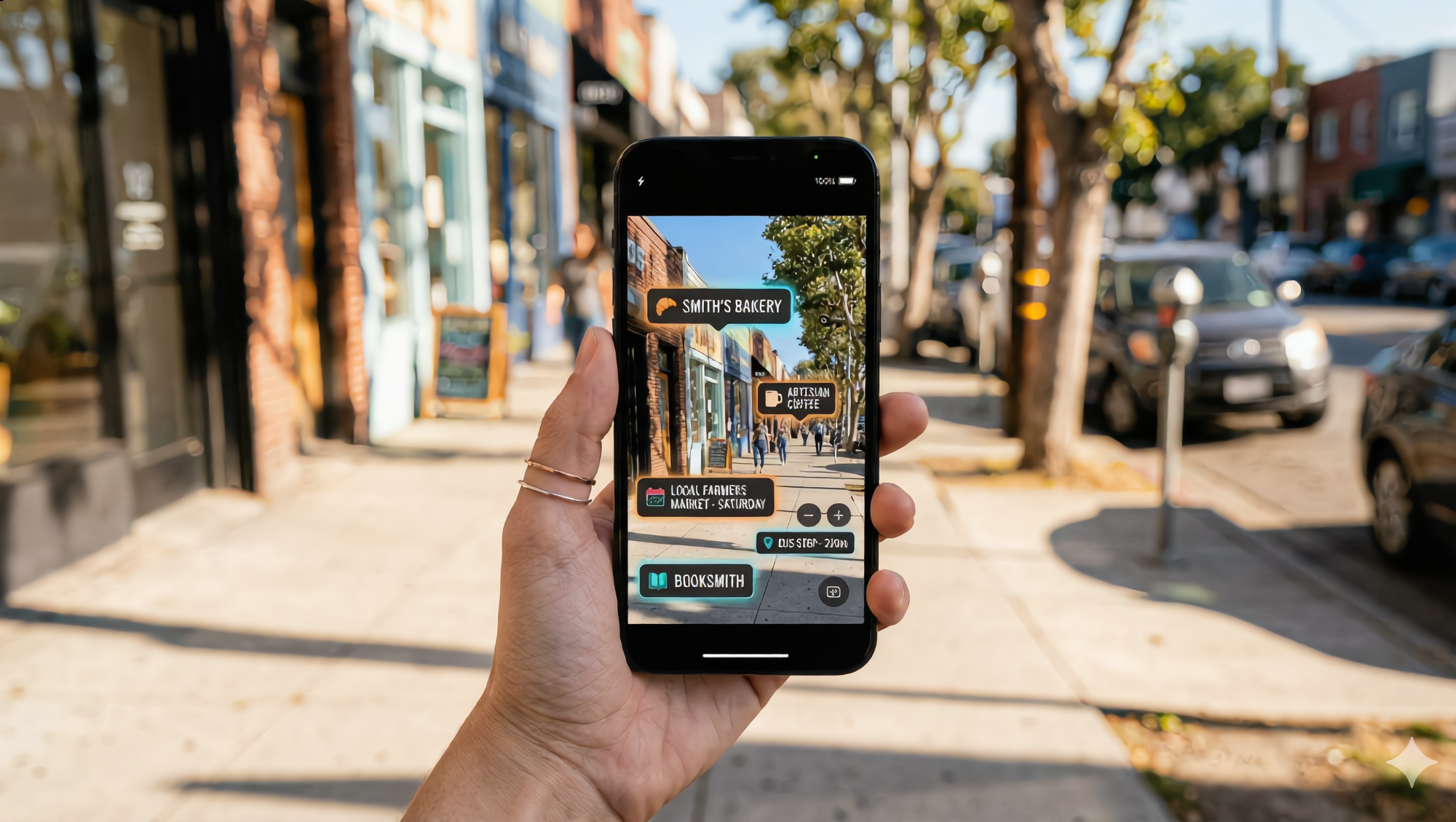
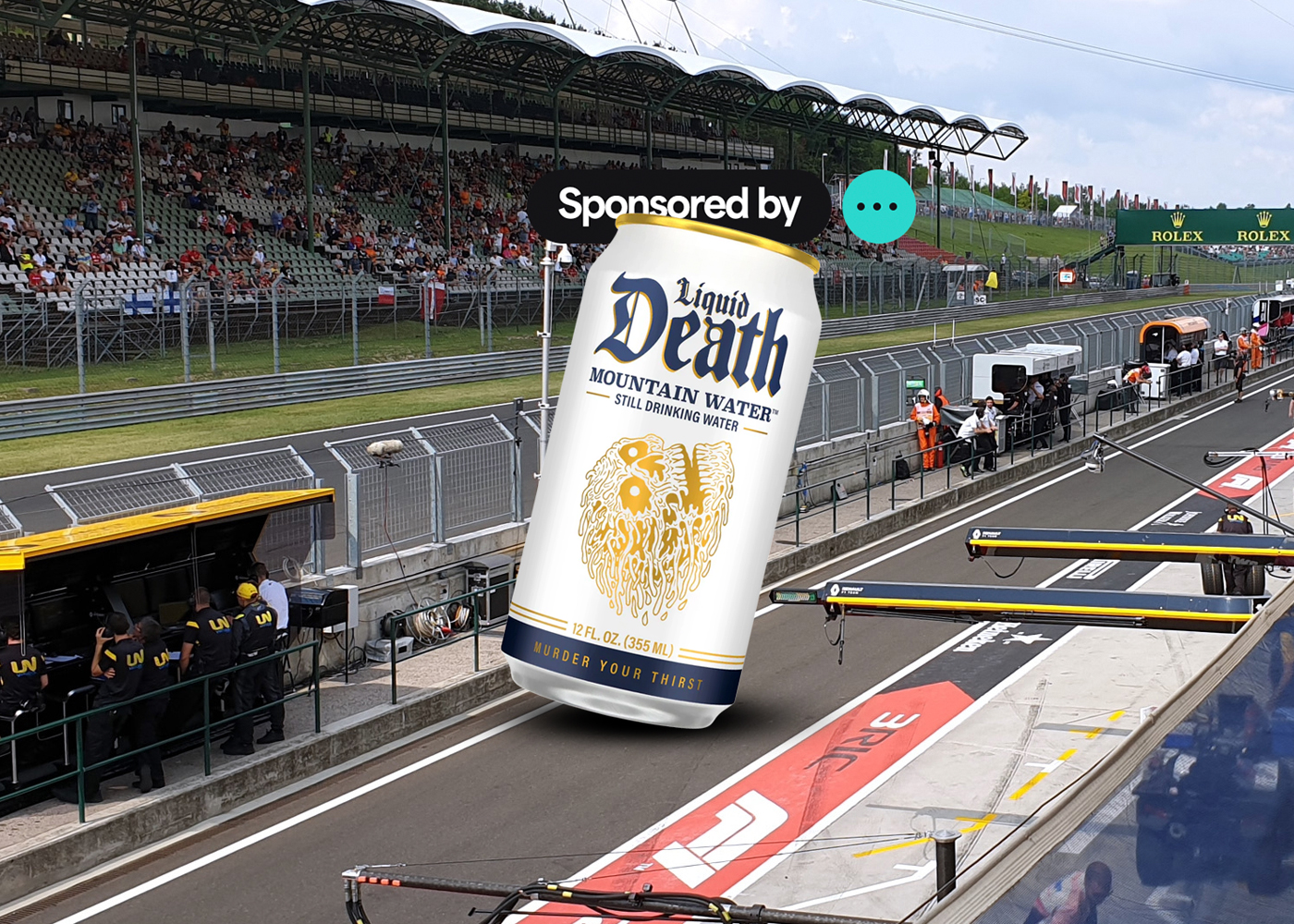
The product idea arrived a year later, in a single moment. Summer of 2012, at the Hollywood Bowl with my friend Josh. We were seated back from the stage, and our friend Liz—a Senior VP at 20th Century Fox Television Studios—was down in the front section, somewhere in the box seats. I was looking through my phone camera, scanning the crowd, trying to spot her—and it hit me like a flash of white light. If I could triangulate from this camera to a GPS signal coming from her phone, factoring direction and distance, I could place a graphic indicator pin right where she was sitting. I could see her location through my camera in z-space. And if I could do that, I could also drop ad content nearby.
I grabbed Josh’s arm and told him to wait until we got out of there. I had to tell him what had just sparked into my head.
I built the deck, wireframes, and UI design. When I told Liz about it, she wrote me a check for ten thousand dollars on the spot and said, “Go.”
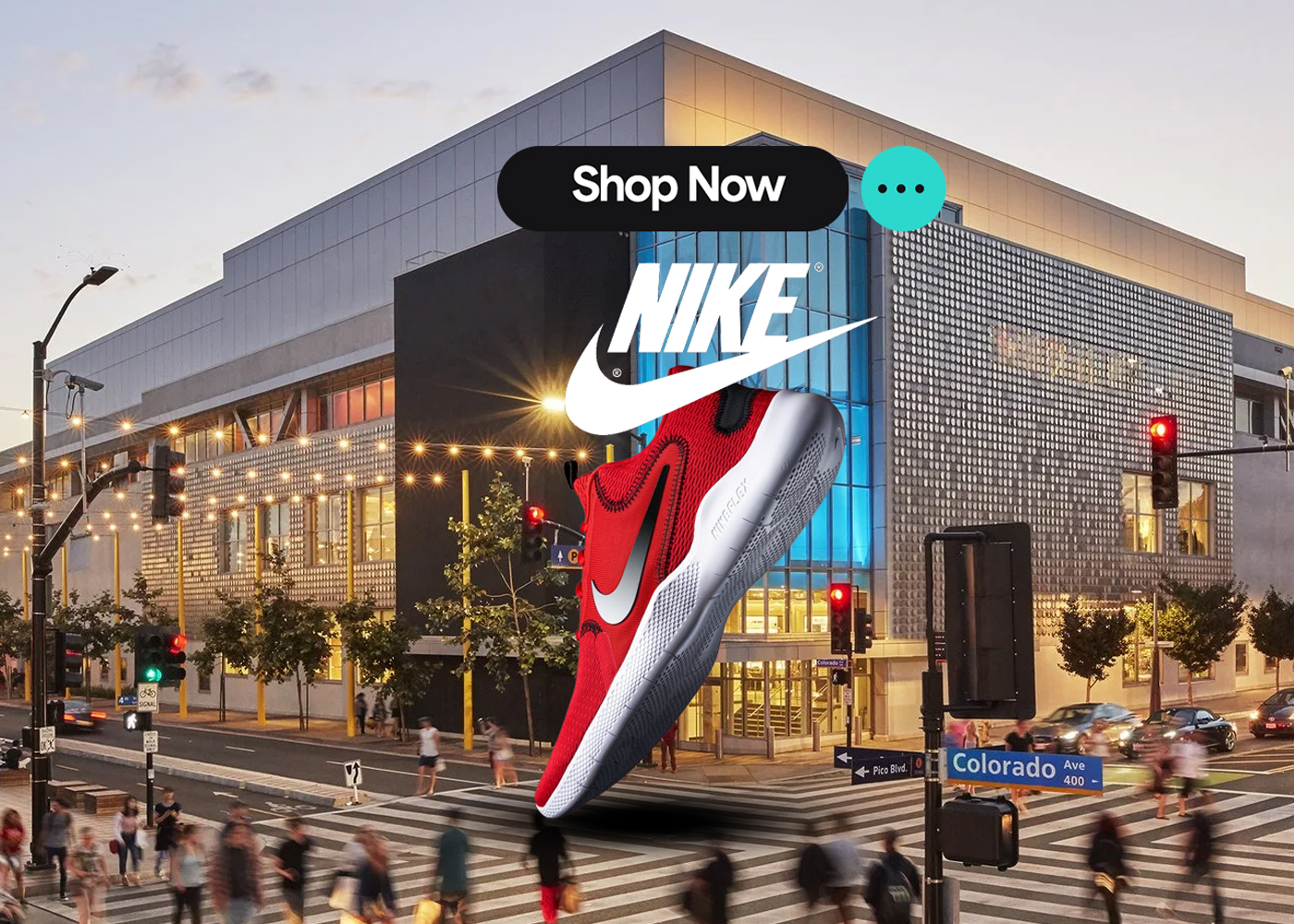
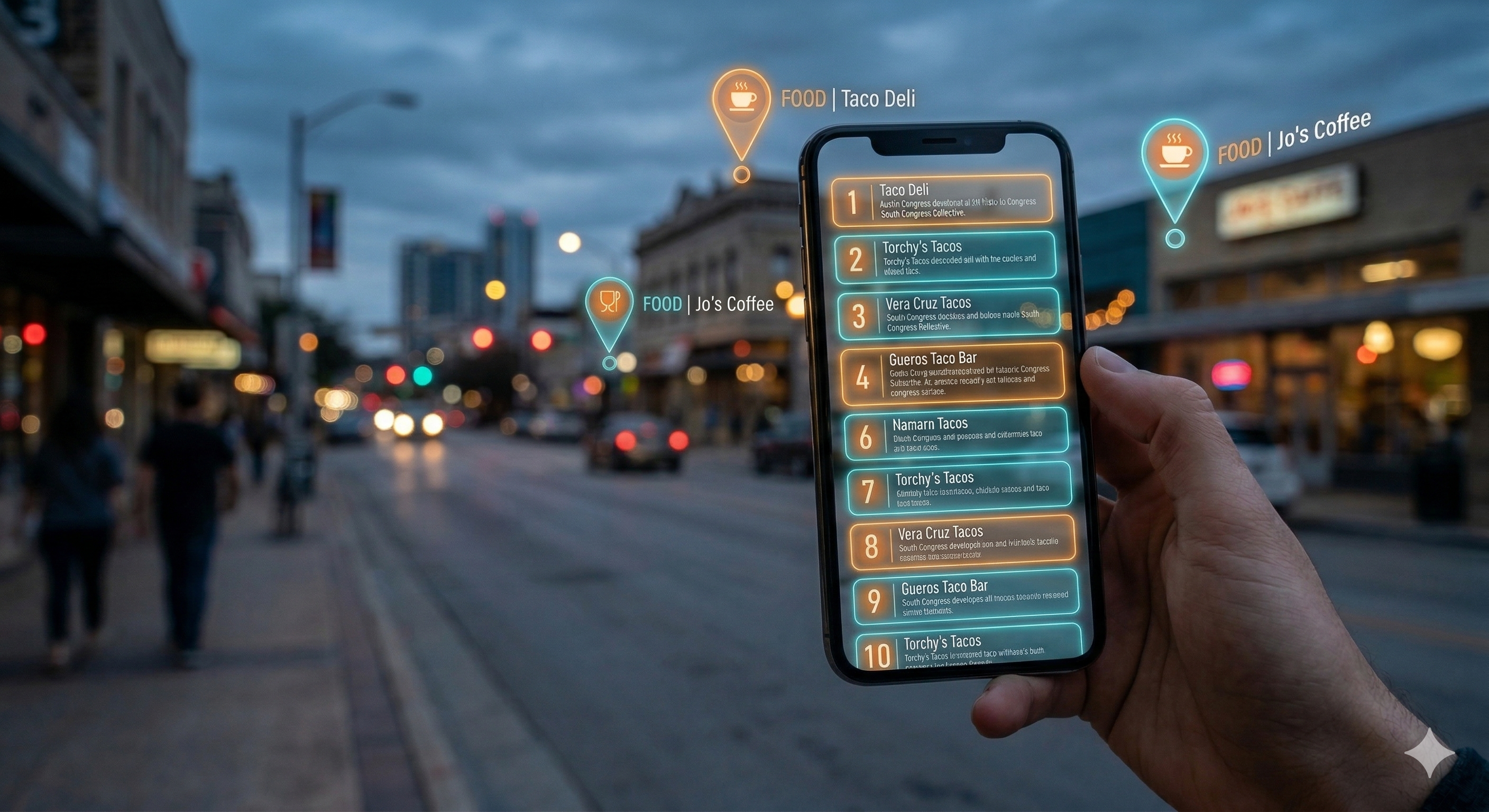
By Thanksgiving of 2013, I had a proof of concept built with an offshore team out of Ukraine. It worked. The problem was that when I started telling people about it, it was like selling air. This was years before Pokémon Go. Augmented reality existed as a concept to most, but nobody had a frame of reference for GPS-anchored content visible through your phone’s camera. People understood finding your friends at a festival—that was the simplest use case, but I saw something so much larger from the beginning: a platform where any location could carry a layer of digital content discoverable by anyone walking by.
I took it where I thought it would matter most first—music festivals. I’d been a drummer since I was a kid, raised playing gospel in church, performing professionally since a teenager, and I loved the chaos of big festivals. But I’d watched friends have near-panic attacks trying to navigate them. I’d watched brands spend fortunes on activations that connected with few. The pain points were everywhere.
In 2014, I went to my friend Ken Deans, who was director of operations for Coachella. Ken saw the demo and his eyes went wide. “That’s a lot cooler than I thought it would be,” he said. He came aboard as our COO, got us into Goldenvoice, and we brought in people from Netflix and Kaizen to help build the brand. We had it in the App Store by April of that year, Apple only, rushing to get to market because I knew what every founder knows—good ideas have expiration dates and someone else must be working on it too.
Goldenvoice gave us an RV and wristbands to test. As I stood out on that polo field with our first beta test group and looked around taking it all in, it was crickets. We were so early with AR it was almost absurd. People were struggling with battery life. Tower signals were unreliable. Facebook login was high friction. The list of infrastructure problems was longer than our feature list. I scrapped the launch, pulled us into stealth mode, and kept building.
That turned out to be the right call. We used the time to raise some angel capital, file our first patent, and bring on Kristopher Cadle as our CTO—a research scientist and true AR pioneer who recognized early that Unity could be used for non-gaming applications. We rebuilt the platform in 3D, AR/VR, cross-platform, Android and Apple, which in those days meant building everything twice.
To stay alive during that period, I took on production work producing special shoots, TV spots, sizzle reels. I did Heineken’s first 3D VR shoot for Major League Soccer, wrestled with GoPro stitching in post—brutal workflow, but fairly exciting results. In 2015, Coachella hired us for a pilot program with early 360-degree single-lens cameras through a chance meeting on a plane with Jeff Glasse from Kogeto who had the Joey 360 camera in the Apple store. We were becoming a ramp from AR to mobile VR. We were out on the bleeding edge, and the edge was bleeding us.
Then, in early 2016, I was sitting on a rooftop in Brooklyn in the middle of a massive blizzard. My phone rang. It was our patent attorney. We’d been awarded our first patent. My eyes were leaking all day.
I felt for the first time like I had created something that was truly, officially mine. It was one of the most beautiful moments of my life.
Six months later, Pokémon Go exploded across the world, and I thought: This is it. This is our moment. Because we weren’t building a game. We were building the infrastructure for connecting people in real life, anchoring digital content to real locations and devices for real people. Pokémon Go was proof of concept for the entire category—and we already had a key utility patent. “Apparatus, systems and methods for visually connecting people…”
During Flaregun’s early years, I encountered a different kind of founder—the original triple-bottom-line entrepreneurs from companies like Guayaki Yerba Maté, Sambazon, and Dr. Bronner’s. These weren’t Silicon Valley optimizers. They were principled people who had been building companies for over twenty years around the idea that business should serve three masters: financial performance, environmental responsibility, and human well-being. I didn’t know yet what kind of company Flaregun would ultimately become, but meeting those founders showed me the kind of founder I wanted to be.
We had momentum but needed help. I began working with co-founders of Sambazon and an early VR company called Gravity that had already exited. We were showing Flaregun to investors in Silicon Valley and Silicon Beach, pitching major brands like Pepsi, Harmon, and others. We had interest from serious people. And then, sitting in a meeting at Sound Ventures, my phone went off with news about my father.
He’d been diagnosed with ALS in 2015. For a while, my mom was bravely managing to keep life normal and things had been relatively stable though she described it like walking in the dark. But in 2016, he was hospitalized, and the word was serious. I needed to come home immediately. It was hospice time. I wrapped the meeting, went to lunch with the team, sat down, told them the news and that I couldn’t focus. I packed my bag, went straight to the airport, and flew to his bedside.
What followed was the hardest decision I’ve made as a founder. I had to tell my partners—Kris, Ken, Jeremy, Zach, James, Gary, Barry, everyone—that I couldn’t do the raise. Not that I wanted to pause; I couldn’t do it. If we took the money, I would owe people my full presence and execution, and I couldn’t guarantee that while my father’s body was shutting down day by day. Saying no to the money and the momentum was devastating. I disappointed people I respected deeply. But I still believe it was right.
I spent the next 250 days as my father’s caregiver, his primary body man for in-home hospice, as ALS took him apart day by day. The cruelty of it is his mind was all there. We got a big queen-size adjustable bed, and he watched me work next to him. He watched me raise a bit more money, assemble a new team in Atlanta, watched us file a second patent, watched me build. Saw me continue my conference call while picking him up off the floor after a fall. For the first time in my career, my dad truly saw what I was making and understood my vision. He saw me. And I met my best self. It was a gift I almost missed.
What happened next is a pattern I’ve lived through three times. Each time, we built Flaregun to the doorstep of something real and each time, something beyond our control knocked it down.
The first was 20th Century Fox in 2017. Through their Innovation Lab, after Kris and I won a Microsoft HoloLens hackathon, we developed a pilot program on the Fox studio lot. AR wayfinding and experiences anchored to landmarks, movie posters that came alive, branded interactive games—the whole vision, approved and budgeted with the Location-Based Entertainment division as a stakeholder for 20th Century Fox World theme park in Malaysia. Then Disney announced they were acquiring Fox. The lab was dissolved. Our deal was dead. Not long after, so was my father.
Between these setbacks, we generated revenue selling white-label versions and built an enterprise SDK. But the second almost was Live Nation. In 2019, we put together a pilot that would start with 22 festivals and expanded to 100. The economics worked: low setup cost for them, revenue share on AR advertising for us. By the end of the year, everyone was coming around, and we were answering their questions with live demos of the platform. We agreed to reconnect after the holidays in mid-January. In the weeks that followed, reports started coming in about a virus in China. The insiders I knew in the festival industry, including Ken were hearing catastrophic signals before the public did. By March, the world shut down. We were already out of money. The deal that was going to save us simply ceased to exist.
The period that followed was the darkest I’ve experienced. I didn’t know how to go forward. Not in the dramatic sense more like the route in front of me just disappeared. We had run aground, and there was no tide coming in that I could see. I just stopped. I know a lot of founders who have been in that place, where it’s not that you want to quit but that you can’t locate the next step. No wind in the sails. Nobody talks about it enough.
We pivoted into Web3 hype during COVID, built a philanthropic metaverse called Cardano Park with NFTs and a perpetual staking pool dedicated to environmental causes. We thought the model and utility had legs, but when the world reopened, we realized the crypto space was too tribal, too volatile, and NFTs were about to implode. NFTs—No Fun Today.
Then came the third almost. In 2022, a fund connected to early money in Napster and MySpace came to us after a year of conversations. They wanted to invest. We entered due diligence, five months of it. Legal fees, documentation, the full grind. The deal memo offered a five-million-dollar raise, two and a half upfront with milestones. I told my investors. I told our team. I slowed down biz dev conversations so I could count them as post-funding wins.
In October 2022, after all of that, the lead investor ghosted us at closing. No call. No explanation. His attorney through our attorney asked me to fly from Atlanta to Marina del Rey to do a handshake closing at the Ritz-Carlton. I left my mother who was aging and needed me, and flew out. I never heard from him again.
COVID was a force majeure. You can process that. But being deliberately abandoned after five months of good-faith due diligence—after uprooting your life, running up legal bills, and making assurances to people who trusted you, that was a different kind of wound. I had to go back to every investor on our cap table and explain what happened. It nearly broke me. The fire in my belly went out.
Through all of these years, I was also supporting my mother as she reclaimed her life.
COVID’s isolation had been hard on her. She and my father had been together since high school, married for five decades, and his death from ALS had shattered something fundamental. I spent years helping her rebuild—handling family complications, the daily talks, getting her on her feet, back on the dance floor of life, making sure she found joy again. We did that. I organized a beautiful 80th birthday party surrounded by her friends. She felt so special and supported that night. It was the first time she really cried tears in years.
I flew back to Los Angeles. Ten days later, I got the call from her best friend Alice. My mom was in the hospital, vomiting, in terrible shape. I got on another plane, one of over a hundred flights I’d taken back and forth by then and found her in a hospital bed she would never leave. Stage four cancer. Three weeks to three months.
We spent thirteen days in the hospital. She needed a care facility, but I went and looked at one and couldn’t bear for that to be her ending. I’d done it for my dad, so I fired up the same engine and did it again for my mom. I became her caregiver, just as I had been his, but learned how to manage it all better and got her the additional support she needed, which came mercifully easy. She was so loved and blessed with so many friends and our angel Juanita who came to live with us.
It hits differently when it’s the second parent. My mom was my best friend. She passed on August 5th, 2023.
Of all the titles I’ve held in my career—Executive Creative Director, Writer-Producer, CEO, co-founder, caregiver has been the most meaningful work of my life. Taking both of my parents through their end-of-life continuum is the thing I’m most meaningful. It’s the thing that gave me so much but cost me the most.
Here is what I want to say about what comes after.
Flaregun never died because I never let it die. Through every crisis, every loss, every near-miss, I kept the patents current, paid every maintenance fee, filed a third patent continuation, maintained trademarks, and paid down the legal bills from the raise that went nowhere. The company went quiet after 2022, but it never went dark. I kept paying because I kept believing the tide would come back in—and because I owed it to every person on our cap table who had believed first. And I owed it to myself to see it through.
I never took a salary. Not once, in over a decade, and we built everything in-house. Because of that and the team, we still hold over half the company’s equity, which means we have real room to raise and real value to offer.
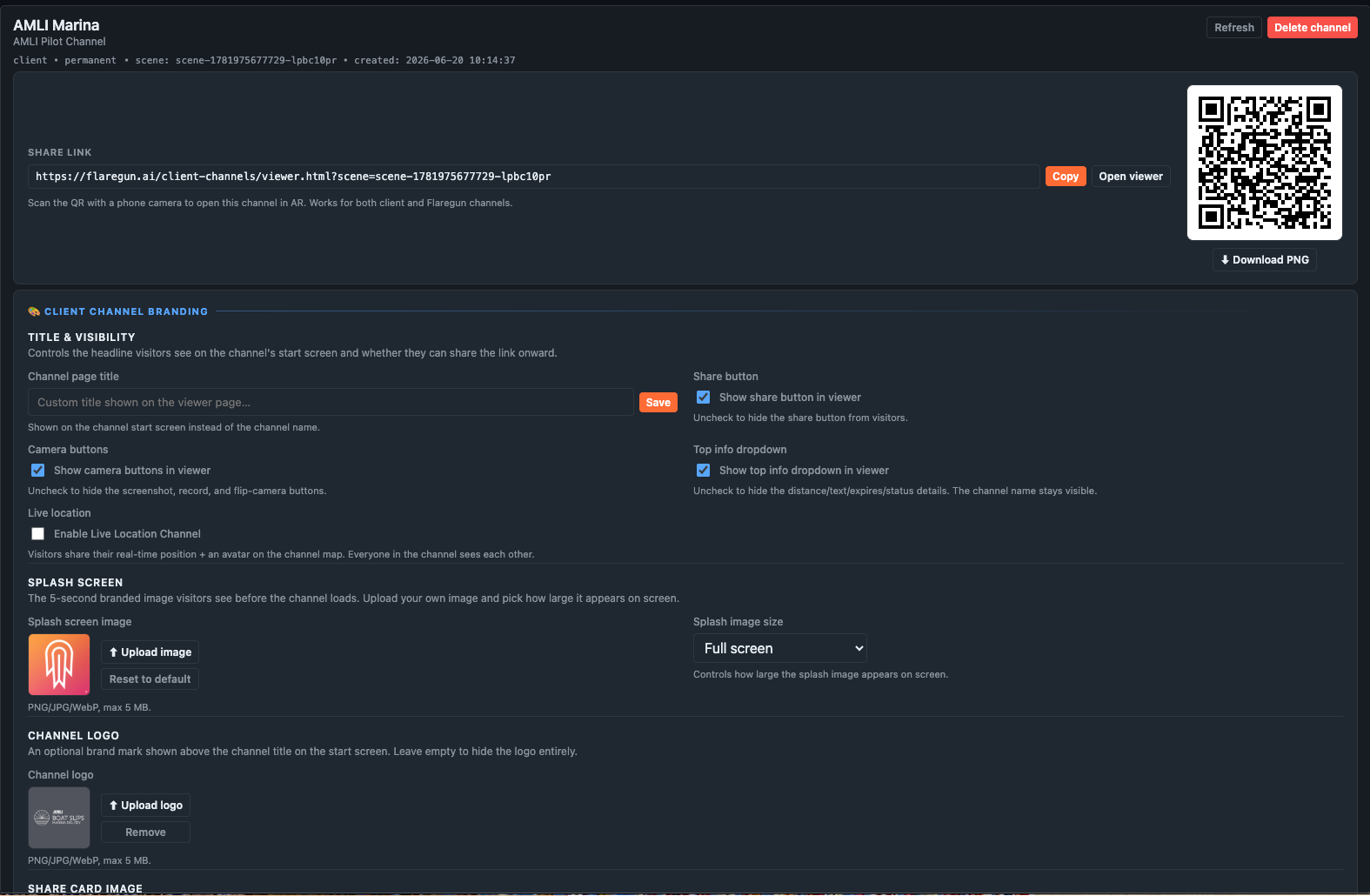
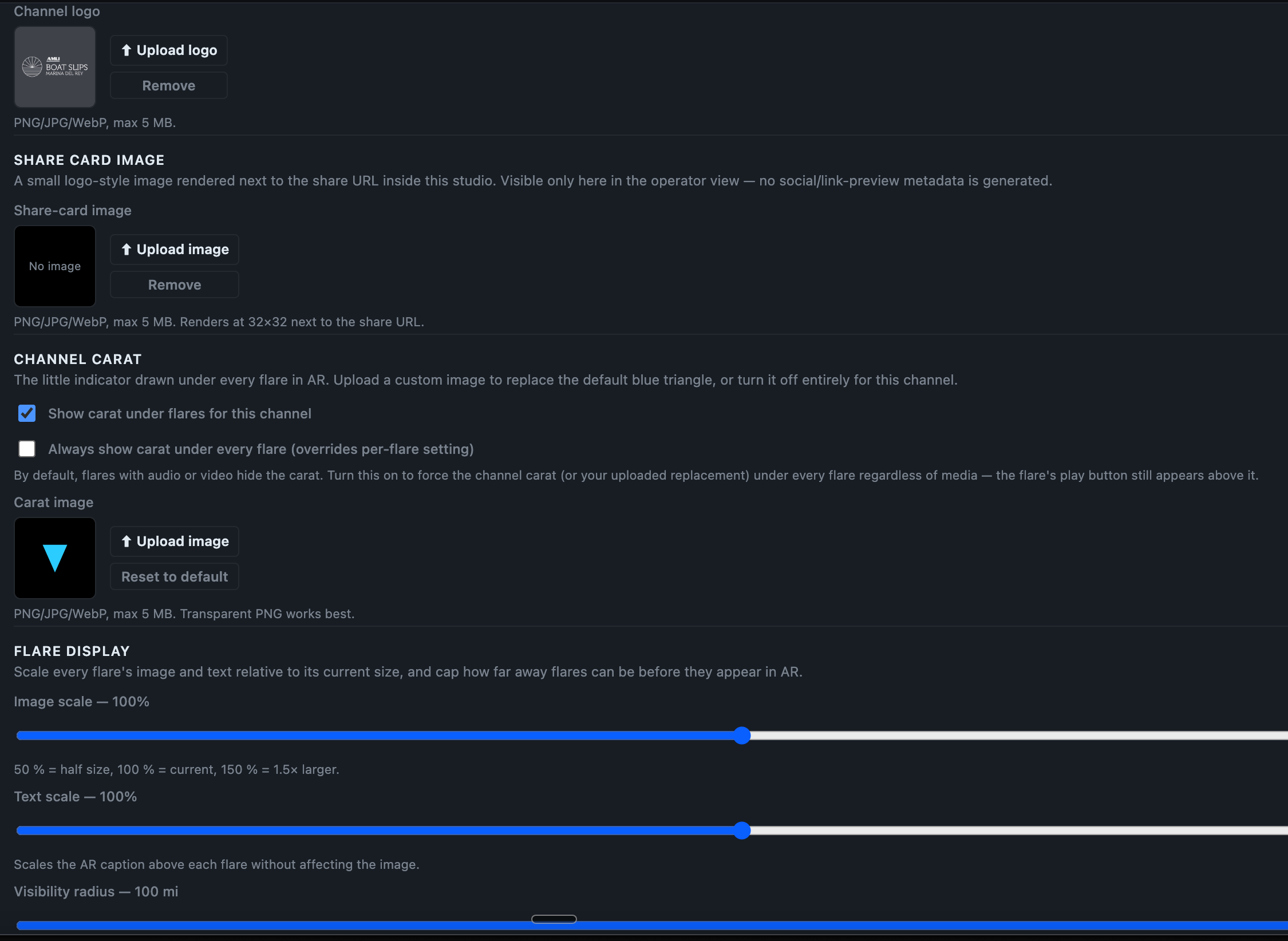
During the time I stepped back, I also watched the world catch up to the vision we’d been building since 2012. AI transformed what’s possible with content creation. The app-download barrier, the thing that limited us at Coachella, is gone. Our platform is now entirely web-based: any phone, any browser, no download required, and wearables are around the corner. You open your camera, choose a channel, and the content is there, anchored to the location. You can add your own content to the airspace, exactly as I saw it in my head at the Hollywood Bowl fourteen years ago.
But the thing that changed most was me. I’m not the same founder I was in 2014, 2019, or 2022. I’ve built tools and instincts that let me move faster and leaner than I ever could before. I know what kind of deals to walk away from. I know what kind of pressure I can absorb. And I know, with a clarity that only comes from loss, exactly why I’m doing this.
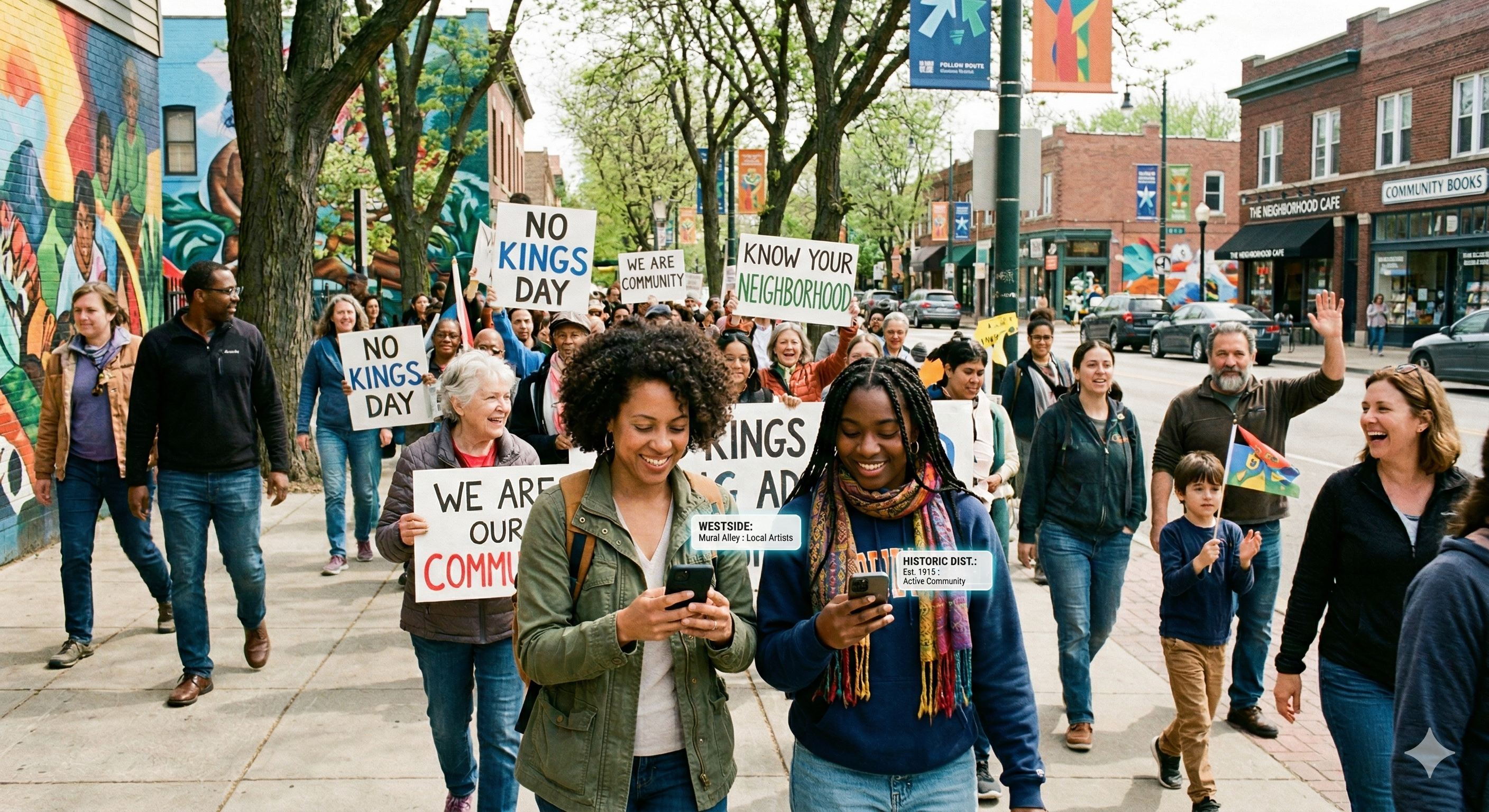
Community organization matters more now than it has in our lifetimes. The ability to coordinate people in physical space, to help them find each other, share information, and build something together without a platform extracting value from every interaction—that’s not a feature. That’s a mission. Flaregun was never meant to be another tool owned by big tech, designed to harvest your attention and sell it. It was always meant to serve you. To make gathering and connecting easier. To make places and people meaningful again.
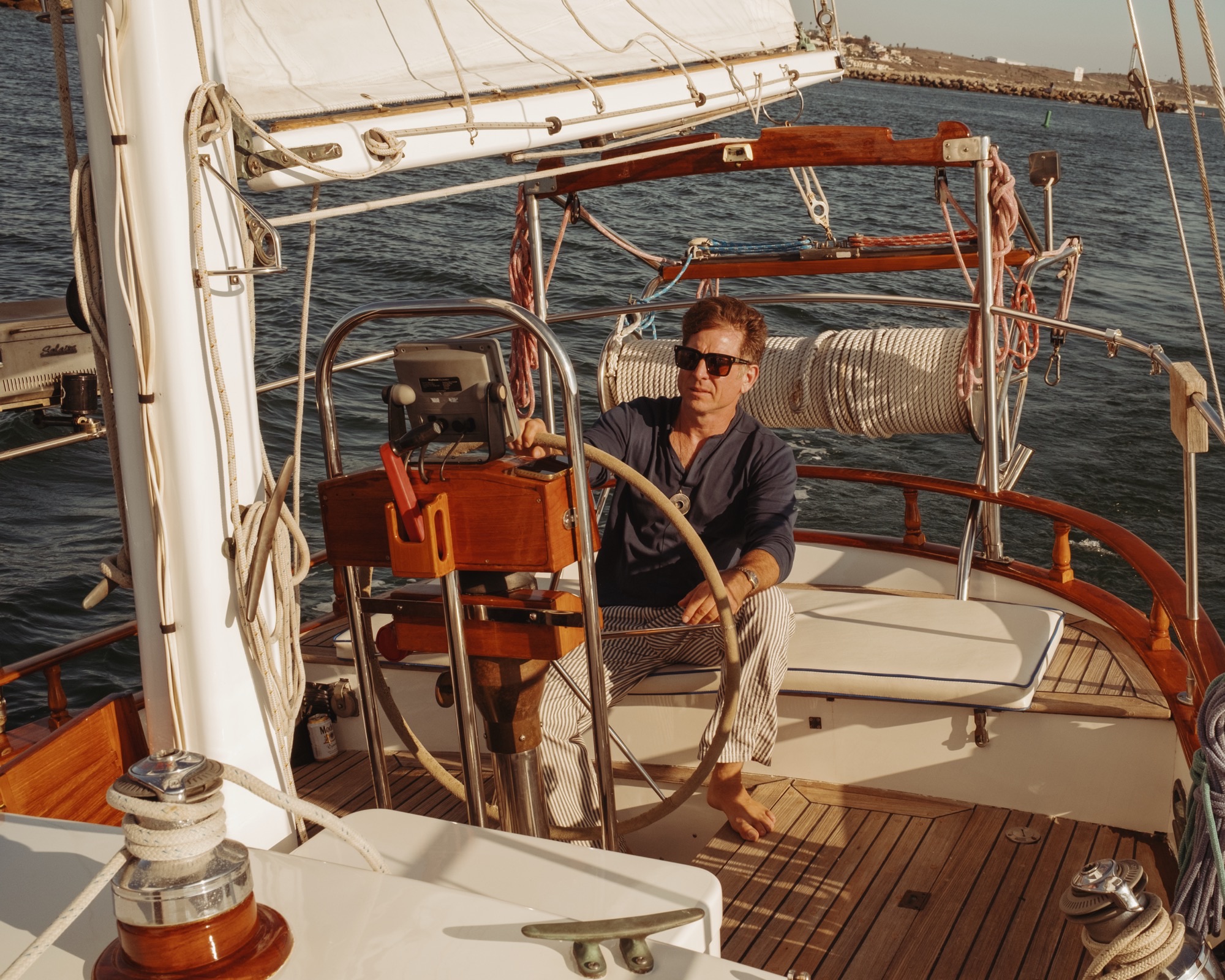
I completed my captain’s license training during COVID, fulfilling a dream my father’s illness cut short for him. I restored a boat and myself out on the water. If he were still alive, we’d be sailing together. In a way, I feel like I’m sailing for both of us. He understood Flaregun, not just the technology, but the name and the mission. A flare gun is how you tell people where you are when words aren’t enough. He got that in his bones.
I wouldn’t wish what I’ve been through on anyone. The losses, the almosts, the years of caregiving, the moments where the path ahead simply vanished. But I wouldn’t trade the growth for anything. Every setback taught me something about what endures—and what endures is the work you do when nobody’s watching, the team and promises you keep when it costs you, and the vision you protect even when protecting it is the hardest thing you do.
Flaregun survived because it was built to be a different kind of company, by a different kind of founder. Not better, just stubborn enough, and clear enough about what matters, to keep the signal lit.
The tide is coming back in. And we're still here.